 Potential of Erigeron bonariensis L. essential oil and its polyacetylene 2-cis-lachnophyllum acid methyl ester as neutralizers of bothropic venoms in vitro
Abstract
Snake envenoming causes human organic multisystem failures and local effects (LEs: hemorrhage, edema and necrose). The antivenom serum is not always effective, generating in extreme cases anaphylaxis and being useless against LEs. An alternative under research is the treatment with alexiteric medicinal plants containing metabolites able to interact and inactivate/neutralize the venom 's components. As, in this context, Erigeron bonariensis L. is a promising species, we aimed to study the alexiteric potential of its essential oil from Uruguay. As assessed by GC/MS, the main components were: 2-cis-lachnophyllum acid methyl ester (cis-LAME,32.8%), 4R-(+)-limonene (22.6%), germacrene D (8.1%), trans-β-ocimene (6.9%) and 1S-(-)-β-pinene (4.8%). cis-LAME was isolated (column chromatography) and identified by spectroscopic methods. The oil and cis-LAME were incubated with Bothrops diporus and B. alternatus venoms, indicating alexiteric potential based on a screening performed by 1D-SDS-PAGE. For B. diporus venom (which causes more envenoming cases in Argentina) were conducted other in vitro tests (inhibition of proteolysis, hemolysis and procoagulant activity). The samples inhibited proteolysis and hemolysis (26.3% and 57.9% for the oil and cis-LAME, respectively), whereas only cis-LAME inhibited procoagulant activity (60.6%). The results obtained confirmed the potential of E. bonariensis to neutralize bothropic venoms, highlighting cis-LAME as a key bioactive component.
Keywords: Asteraceae; snake venom; alexiteric activity; medicinal plants
Introduction
According to the World Health Organization (WHO), snakebite envenoming (ophidism) is a Neglected Tropical Disease, due to the fang injection of the venom in the body could cause an organic multisystem failure, affecting not only the contact area but also systematically the lungs, kidneys, brain, liver, muscles, and heart[1]. Every year, ophidism causes more than 138.000 mortal victims worldwide in severe cases for sensitive people, frequently when no medical treatments are applied to counteract the deleterious effects because the accidents occurred far away from a public health center[1]. The conventional medical allopathic treatment (antivenom serum composed of protein antibodies obtained from horses after inoculating small amounts of snake venoms) has at the same time many undesirable effects including allergic reactions which may progress to severe anaphylaxis cases, with risk of death[2]. The antivenoms, despite acting systemically and being able to save lives, are not effective against the local effects of the venoms, which include hemorrhage, edema and necrose (leading to amputation of the affected members in some cases)[2]. The severity of ophidism and the incomplete efficacy of antivenom therapy highlight the need for complementary approaches, such as Phytotherapy. In South America, among the most dangerous venomous snakes are those of the genus Bothrops (Viperidae), commonly known as “pit vipers”, which include at least 48 species in the region[3,4]. All around the world, and particularly in South America, ethnobotanical specific surveys have demonstrated the potential of medicinal plants to treat the deleterious effects caused by the venomous snakebites, as reported in Brazil[5] and Colombia[6]. Specialized phytometabolites have been proposed for modern pharmacology research as possible neutralizers of the snake venoms and their effects (exerting alexiteric activity), both as pure substances or extracts[7-10].
In South America, several species of the Asteraceae family have been pointed out as relevant for neutralizing snake venoms (in raw state, or to inhibit the main protein components, as the case of phospholipase A2 and metalloproteinases), as the case of Baccharis spp. L.[11-16], Blainvillea acmella (L.) Philipson[17,18] (synonym: Eclipta prostata Lour.), Mikania glomerata Spreng.[19]; Trixis antimenorrhoea (Schrank) Kuntze [synonym: Trixis divaricata (Kunth) Spreng.][20]; Ambrosia polystachya DC. and Tithonia diversifolia (Hemsl.) A. Gray[14], among others. In addition, the essential oil of Erigeron bonariensis L. (synonym: Conyza bonariensis Cronquist) has been highlighted by its capacity to counteract the effect of the snake venoms in vitro [14]. The chemical composition of this essential oil has been extensively investigated worldwide ([21] and references therein). However, no studies have characterized the essential oil profile of this species in Uruguay, nor has been explored its potential as a source of isolated compounds capable of neutralizing Bothrops venoms.
Thus, the aim of this work was to perform a systematic evaluation of the in vitro activity of E. bonariensis essential oil obtained from plant material from Uruguay against bothropic venoms (models: Bothrops diporus and B. alternatus), as well as to assess the biological activity of its major polyacetylene compound, 2-cis-lachnophyllum acid methyl ester (hereafter cis-LAME). Besides, the chemical composition of the essential oil was evaluated by gas chromatography/mass spectrometry (GC/MS) protocols, including conventional and enantioselective analyses.
Material and Methods
Plant material and snake venoms
Selected healthy aerial parts of E. bonariensis were sampled at blooming stage (autumn), in Southern Uruguay, Canelones Department, “Los Cerrillos” area. A voucher sample of the species was deposited in the Faculty of Chemistry, University of the Republic (MVFQ 3424 E. Alonso Paz, in memoriam).
Venom pools from captive specimens of B. alternatus and B. diporus were employed, collected via the milking method by trained personnel at the Interactive Center for Venomous Snakes (CISVA), Faculty of Veterinary Sciences, National University of the Northeast (UNNE), Corrientes, Argentina[16].
Essential oil extraction
The extraction of E. bonariensis essential oil was performed by hydro-distillation as previously described[22], employing 200 g of finely powered one-week dried plant material placed in a rounded flask, to which was attached a Clevenger-type glass device. Distillation took place for 90 min, and after recovery of the essential oil, anhydrous sodium sulfate was added (Sigma-Aldrich, St. Louis, MI, USA). Finally, the oil was stored under refrigeration (−4°) until being analyzed and used in biological assays. Yield: 0.65% v/v.
Gas chromatography/mass spectrometry (GC/MS) analyses
The conventional GC/MS analysis was performed as previously described[23] using a Shimadzu GC 2010-QP 2020 instrument (Shimadzu, Kyoto, Japan), equipped with a Rxi-5MS capillary column of 30 m length × 0.25 mm i.d. × 0.25 μm film thickness (5% diphenyl-95%-dimethlylpolysiloxane; Restek, Bellefonte, PA, USA). The oven temperature program was as follows: 40°C (4 min), 40 to 180°C at 4°C.min-1, 180°C (2 min), 180 to 280°C at 10°C.min-1, 280°C (10 min) (total run time: 61 min)[22]. Injector, interface and ion source temperatures: 280°C. Carrier gas flow (Helium 99.999% pure; Linde, Woking, UK): 1.0 mL.min-1, kept constant. Injection: 1.0 μL of a 1:100 diluted solution in n-hexane (Carlo Erba, Val-de-Reuil, France). The mass spectrometer was operated in electron ionization mode (70 eV), with a m/z scan range of 50-350 a.m.u. Commercial mass spectral libraries were employed for comparison of the fragmentation patterns obtained for each chromatographic peak[24,25]. Linear Retention Indices (LRIs) were determined by injecting a solution of n-alkanes (C8-C20; Sigma-Aldrich) in the same analytical conditions as the samples, and comparing the values obtained with Adams[24], unless other sources are specified. The identified peak raw areas were informed as compounds' abundances (%) without normalization.
GC/MS enantioselective analyses were performed in duplicate for the determination of the enantiomeric distribution of selected monoterpene hydrocarbons of E. bonariensis essential oil (α-pinene, sabinene, β-pinene, and limonene). For this purpose, it was performed the raw area comparison of both enantiomers' peaks obtained after the elution in a capillary column composed of a derivatized β-cyclodextrin (chiral selector). The column employed was a CycloSil-B (30% heptakis-2,3-di-O-methyl-6-O-tert-butyl-dimethylsilyl-β-cyclodextrin in 70% DB1701 matrix; dimensions: 30 m length × 0.25 mm i.d. × 0.25 μm film thickness; J&W Scientific, Folsom, CA, USA), which was attached to a GC HP6890 coupled to MSD 5973 (Hewlett-Packard; Palo Alto, CA, USA). The oven temperature programming was as follows: 65°C (1 min), 65 to 100°C at 1°C.min1, 100°C (1 min), 100 to 150°C at 2°C.min-1, 150 to 220°C at 10°C.min-1, 220°C (3 min) (total run time: 72 min)[23]. Injector, interface and ion source temperatures: 220°C. The other GC/MS parameters were the same as above reported for conventional GC/MS analysis. The enantiomers elution order was obtained from the literature employing the same chemically composed stationary phase[26].
Isolation of cis-LAME
The polyacetylene cis-LAME was isolated from E. bonariensis essential oil according to our previous report[27]. Briefly, an open column chromatography was packed with previously activated Silica gel (230-400 mesh; Merck, Darmstadt, Germany) as stationary phase and eluted with a static gradient of n-hexane:CH2Cl2 (5:1; Cicarelli Lab); flow: 1.8 mL.min-1. A total of 24 fractions (around 2.0 mL) were collected. The chromatographic separation was monitored by TLC (Silica Gel 60 mesh F254; mobile phase: n-hexane-CH2Cl2 2:1; Cicarelli Lab); visualization: UV: 254 nm and p-anisaldehyde-sulphuric acid visualization reagent[28]. cis-LAME was obtained with 96.4% (GC/MS) purity. The identity of the compound was verified by obtaining of UV-Vis spectra (Beckman DU-610, Fullerton, CA, USA), NMR (Bruker BZH 200/52; Billerica, MA, USA), FT-IR (PerkinElmer GX FTIR provided with a DGTS detector; Shelton, CT, USA), and MS (GC HP6890 and MSD 5973; Hewlett-Packard), by comparing with our previous report[27] and the literature[29-31].
Neutralization of bothropic venoms
The neutralization of the venoms was performed as recently described in detail[16]. In summary, a screening for alexiteric activity was performed for the venoms of both Bothrops spp., B. diporus and B. alternatus, which were incubated with the pure essential oil from E. bonariensis and cis-LAME, by evaluating the modification of the protein profile using 1D-SDS-PAGE (ratio 1:7). Subsequently, given that the species causing the most of the ophidian accidents is B. diporus (90% of accidents caused by Bothrops spp. in Argentina; Torres et al.[2]), further research was conducted on the in vitro inhibition activities against its venom, such as proteolysis inhibition (casein model; ratio 1:120), indirect hemolysis inhibition (agar blood model; ratio 1:40), and inhibition of procoagulant activity (evaluated with a coagulometer; ratio 1:10)[16]. Carquejone (5-methylidene-6-prop-1-en-2-yl-cyclohex-2-en-1-one) and AcOEt extracts of B. articulata and B. genistelloides var. crispa were selected as positive controls for alexiteric activity and for comparison with our previous research[15,16], while the negative control was the solvent in which the samples were diluted (EtOH).
Data availability
Some data of this article (FIGURES S1 to S9) are available at the Figshare online repository[32].
Results and Discussion
Chemical composition of E. bonariensis essential oil
FIGURE 1 shows the conventional GC/MS analysis of E. bonariensis essential oil from Uruguay in Rxi-5MS capillary column, while in TABLE 1 is summarized the chemical composition obtained.
: Chromatogram GC/MS (conventional analysis) of E. bonariensis essential oil in Rxi-5MS capillary column. For the analytical conditions see Materials and Methods. The numbers of the peaks are in accordance with the numbers provided in TABLE 1; ni: not identified.
A total of 46 components were identified for E. bonariensis essential oil from Uruguay, accounting for a percentage of identification of 91.9% in CycloSil-B column and 93.4% in Rxi-5MS (TABLE 1). The main group of identified components were the monoterpene hydrocarbons, followed by C10 polyacetylenes, and then sesquiterpene hydrocarbons (TABLE 1).
As expected from the essential oil composition of E. bonariensis reported in the literature[21], the polyacetylene cis-LAME [IUPAC name: methyl (Z)-deca-2-en-4,6-diynoate] was one of the main components reaching approximately 31.0-32.8% of abundance in the Uruguayan sample (TABLE 1, FIGURE 1). In fact, hydro-distilled essential oils obtained from the aerial plant materials from other countries also reported it as one of the main ones, i.e. for Brazil (57.2%; Ferreira et al.[35]), Greece (10.8-21.2%; Tzakou et al.[36]), Italy (14.2%; Benzarti et al.[37]), Pakistan (24.9%; Abbas et al.[38]), and Togo (9.8%; Adande et al.[39]). However, there are also reported E. bonariensis essential oils without cis-LAME, as for Brazil[40], Venezuela[41] and Tunisia[42], among other countries. Two lachnophyllum lactone isomers were detected by their mass spectra comparison with the literature (see Supplementary Material, FIGURES S1 and S2)[32], and despite in our work was not possible to identify the stereochemistry of both, the peak at LRIRxi-5MS 1513 (peak 34, TABLE 1) probably corresponds to the 4-cis isomer because it was the most abundant in our conditions (1.8-2.3%) as was previously informed in the literature for E. bonariensis from Spain[43] and Togo[39]. Similarly, the peak at LRIRxi-5MS= 1450 (peak 26, TABLE 1) could be assigned tentatively to the 4-trans-lachnophyllum lactone, unreported in the literature for this plant up to our knowledge, and present at 0.1% or lesser in our work (TABLE 1). Previously, we identified a lachnophyllum lactone isomer co-eluting with the cis-LAME peak in GC/MS, which was then resolved using GCxGC/HRTOFMS[34]. This result matches well with the peak now tentatively identified as the 4-cis isomer, because both exhibited closer LRI values in Rxi-5MS: 1513 and 1519 for the lactone and the cis-LAME, respectively. Moreover, in our work the matricaria acid methyl esters were not found (these compounds are related to the lachnophyllum acid methyl esters, but having an additional double bond), as reported in the literature[36,42,44]. Other relevant components of E. bonariensis essential oil found in this work were limonene (23.4-25.3%), germacrene D (4.6-8.1%), trans-β-ocimene (3.1-6.9%), β-pinene (4.8-4.9%), spathulenol (2.0-4.8%), and bicylogermacrene (1.2-3.7%) (TABLE 1). All of them previously reported for essential oils of E. bonariensis growing in different geographical regions[21].
Enantiomeric distribution of selected monoterpene hydrocarbons
FIGURE 2 shows the enantioselective GC/MS analysis of E. bonariensis essential oil from Uruguay using a CycloSil-B capillary column, while in TABLE 2 it is summarized the enantiomeric distribution found for the selected chiral monoterpene hydrocarbons (α-pinene, sabinene, β-pinene, and limonene). Both cis-LAME and lachnophyllum lactone are not chiral (FIGURE 3), thus the enantioselective analyses did not apply for such compounds. For other minor or trace-level chiral monoterpene components of E. bonariensis essential oil such as terpinen-4-ol and α-terpineol (among others), the enantiomeric distribution could not be determined with confidence, so it was not informed in this report (e.g. peaks 11a and 11b in FIGURE 2).
: Chromatogram GC/MS (enantioselective analysis) of E. bonariensis essential oil in CycloSil-B capillary column.
: Chemical structures of 2-cis-lachnophyllum acid methyl ester (cis-LAME, I) and of 4-cis-lachnophyllum lactone (II), components of the E. bonariensis essential oil.
For E. bonariensis essential oil, predominated the following enantiomers of the selected chiral hydrocarbons monoterpenes (enantiomeric distribution higher than 95%): 4R-(+)-limonene and 1S-(-)-β-pinene (TABLE 2). Whilst the predominance of (1R,5R)-(+)-sabinene over its counterpart was approximately 2:1, and for α-pinene almost a racemic mixture was evidenced (TABLE 2). Up to our knowledge, no previous enantioselective analysis has been conducted for this species. Overall, enantioselective studies of major monoterpene hydrocarbons in Erigeron spp. and other Asteraceae remain scarce. Thus, for comparison purposes, in TABLE 2 are included data on the limonene enantiomeric distribution of E. canadensis[45], as well as data comparison with another closely related Asteraceae species, Baccharis tridentata Vahl., for which the determination of the corresponding enantiomeric distribution values was performed as in the present work[23]. In that way, 4R-(+)-limonene appeared to be highly predominant over the 4S-(-) counterpart in Erigeron genus, a fact not evidenced for Baccharis genus. The enantiomeric distributions observed in E. bonariensis clearly differ from those of B. tridentata, including opposite trends for sabinene and β-pinene enantiomers (TABLE 2), highlighting their chemotaxonomic significance. Additional studies are required to determine whether these patterns remain consistent across seasons and throughout different ontogenetic stages.
Isolation of cis-LAME
The main component of E. bonariensis, cis-LAME, was isolated by column chromatography using silica gel as stationary phase. TLC was employed to assess the separation efficiency (FIGURE 4). p-Anisaldehyde/sulphuric acid was employed as visualization reagent system; however, the spot of cis-LAME was barely observed at such conditions, being its presence detected by using UVλ= 365 as previously reported by us[34]. From the 24 collected fractions, those numbered 11-16 were mixed (FIGURE 4), and after vacuum evaporation of the solvent, about 130 mg of the compound was obtained (94.0% purity by GC/MS). The identity was established by 1H- and 13C-NMR, being compared with literature reports[29-31]. The spectroscopic data, including the chemical shifts in 1H- and 13C-NMR, of this compound was previously published, as well as the mass spectrum at low- and high-resolution and the UV-Vis spectrum[27]. In this contribution we provide the raw 1H-NMR, 13C-NMR, 1H-1H COSY, 1H-13C HSQC and 1H-13C HMBC spectra of cis-LAME in CDCl3 (FIGURES S3 to S7) as well as the UV-Vis and FT-IR spectra of E. bonariensis essential oil (FIGURES S8 and S9)[32].
: TLC results of the column chromatography separation of cis-LAME, consisting of 6 consecutive plates and 24 applied fractions (1 to 24).
Neutralization of bothropic venoms
FIGURE 5 shows examples of the electrophoresis results (1D-SDS-PAGE) following the modification of the protein profile of the Bothrops spp. venoms after the incubation with the samples of interest.
As demonstrated by our group, the interaction of the venom's components with the phytometabolites in vitro by 1D-SDS-PAGE, is a primary indicator of alexiteric activity which in general is corroborated by other neutralizing assays: inhibition of proteolysis, indirect inhibition of hemolysis, and the inhibition of the pro-coagulation effect of the normal plasma[46]. In that approach, both E. bonariensis essential oil and its pure component cis-LAME interacted with the protein components of B. diporus and B. alternatus snake venoms as visualized by 1D-SDS-PAGE, which is interpreted as the disappearance (or even the “withening”) of most (or some) of the protein bands (TABLE 3, FIGURE 5). These results demonstrate the potential of both the essential oil and the polyacetylene compound as neutralizers of Bothrops venoms. Further investigations are needed, including a broader range of alexiteric assays, as well as evaluations across additional Bothrops spp. and considering the intrinsic variability in venom composition. To further confirm this potential, in vitro assays of inhibition of proteolysis (casein model), indirect inhibition of hemolysis (with agar blood medium), and inhibition of the pro-coagulation effect of the normal plasma[15,16] were applied after the incubation of B. diporus venom with E. bonariensis essential oil and cis-LAME (TABLE 3).
As is evident from the data presented in TABLE 3, both E. bonariensis essential oil and cis-LAME showed neutralizer properties of B. diporus venom activity in vitro. Both inhibited the proteolysis of the protein model casein, while cis-LAME inhibited the hemolysis by 57.9 ± 1.0% and the pro-coagulation effect by 60.6 ± 1.0%, better than E. bonariensis essential oil at the same concentration level (TABLE 3). The results obtained are comparable to those obtained for carquejone and other extracts reported by us as highly alexiteric at in vitro conditions, as the ones of B. articulata and B. genistelloides var. crispa in AcOEt employed in this work as positive controls[15,16] (TABLE 3).
Our results should be evaluated considering the work by Miranda et al.[14], which was the first one (to our knowledge) reporting the potential of E. bonariensis essential oil as neutralizers of snake venoms. These authors extracted by hydro-distillation the essential oil from plant material collected in Brazil (Lavras, Minas Gerais State). They assessed the inhibition of pro-coagulation (clotting) and fibrinogenolysis (proteolysis of fibrinogen, which forms the core of the clots) induced by the venoms of B. atrox, B. moojeni (both pit vipers) and Lachesis muta (a venomous snake also belonging to the Viperidae family). The oil was predominantly composed by the monoterpene hydrocarbons limonene (56.7%; enantiopurity not studied) and trans-β-ocimene (26.3%), and the monoterpene alcohol cis-verbenol (4.4%); not polyacetylenes were informed in the composition. E. bonariensis oil could inhibit the pro-coagulant effect of the three snake venoms at both quantitative relationships of 1:17 and 1:8 (essential oil-venoms). The best results were obtained for B. moojeni venom with percentages of inhibition higher than 100% [control clotting time: 108.3 seconds; clotting time after the incubation with the oil at approximately (1:8): 2340 seconds], a fact that the authors associated primarily to the monoterpenes composing the oil[14]. However, the essential oil did not inhibit the fibrinogenolysis in either venom, as followed by 1D-SDS-PAGE. Considering the study of Miranda et al.[14] and ours, it can be found discrepancies: while the essential oil from Brazil was reported as inhibitor of the pro-coagulation and did not affect the proteolysis of fibrinogen, the oil from Uruguay did not displayed inhibition of pro-coagulation but inhibited the proteolysis of casein (TABLE 3). However, both works highlight the potential of E. bonariensis as a source of neutralizer components (essential oils) against the bothropic venoms. The apparent discrepancies in the level of bioactivity could be related to the different chemical composition found for both essential oils, ours being very rich in polyacetylenes. In fact, cis-LAME exhibited positive inhibition of the pro-coagulant effects, also demonstrating inhibition of proteolysis and hemolysis (TABLE 3), being a promising scenario for developing a therapeutic alternative for treating Bothrops snake envenoming local effects. To our knowledge, no previous mention of the polyacetylenes potential as inhibitors of snake venom effects has been made in the literature, thus stimulating new original research at in vivo conditions, and for elucidating the mechanism of action of cis-LAME (and eventually the related lactones) against bothropic or non-bothropic venoms.
Previously, we hypothesized by doing a basic structure-activity relationship study, that the α,β-unsaturated carbonyl moiety is essential for the alexiteric activity[15]. This is the case of carquejone reported in that work and the same for a neo-clerodane diterpenoid reported by other authors[11]. In the current contribution, further evidence is presented, since cis-LAME also contains an α,β-unsaturated carbonyl motif (carbonyl of an ester group, FIGURE 3). It can be hypothesized that the 4-cis-lachnophyllum lactone also could be alexiteric due to having the same structural moiety. In fact, such compound has been already reported as bioactive as allelopathic, antileishmanial, antimycobacterial and nematicide[31,43], among others reports.
Considering the serotherapy limitations currently applied to snake envenoming treatment, the developing of alternative or complementary treatments that deals with the local effects (edema, necrose, hemorrhage) of the venoms is priority, and in that circumstance, the use of essential oils eventually formulated to be applied topically could open up new research options[14].
Conclusion
In this contribution we highlighted the potential of E. bonariensis essential oil, and its main polyacetylene component (cis-LAME), as neutralizer of bothropic venoms (models: B. diporus and B. alternatus) at in vitro conditions, which was demonstrated by interaction of the protein venom components with the phytometabolites by 1D-SDS-PAGE. Further evidence was obtained by confirmation of the inhibition of proteolysis, hemolysis and pro-coagulation effect induced by B. diporus venom, particularly in the case of cis-LAME. Beyond the bioactivity results, the phytochemical characterization of E. bonariensis essential oil from Uruguayan origin, as well as the original report on the enantiomeric distribution of selected chiral monoterpene hydrocarbons (α-pinene, sabinene, β-pinene, and limonene) were additional findings of this contribution. Future research should focus on evaluating the effects of E. bonariensis essential oil and cis-LAME in vivo (animal models), elucidating their alexiteric mechanisms of action (including those of potential lactone derivatives), and determining the pharmacological and pharmacodynamic conditions required for their topical application.
Acknowledgements
Authors acknowledge the SILOE Organizers (Coordinator: Prof. Dr. J.P. Viana Leite and the Organizing Committee) for the opportunity to present this work, and to the Uruguayan National Systems of Researchers (SNI-ANII) for providing funding to conduct this research. PEDECIBA, AUGM, UNT and UNNE (Argentina) Management and Researcher Staffs, and Analytical Facilities are also recognized.
References
- 1 WHO (World Health Organization). Snakebite envenoming: a strategy for prevention and control. [on-line]. Geneva, Switzerland: World Health Organization; 2019 [acesso em: 28 out. 2025]. Available at: [ https://www.who.int/publications/i/item/9789241515641 ].
» https://www.who.int/publications/i/item/9789241515641 - 2 Torres AM, Camargo F, Ricciardi-Verrastro BV, Ricciardi G, Dellacassa E. Plantas como antiveneno: del mito al logos. [on-line]. Montevideo, Uruguay: Ediciones Universitarias de la Universidad de la República (UCUR); 2015 [acesso em 28 out. 2025] Available at: [ https://hdl.handle.net/20.500.12008/10977 ].
» https://hdl.handle.net/20.500.12008/10977 - 3 Carrasco PA, Mattoni CI, Leynaud GC, Scrocchi GJ. Morphology, phylogeny and taxonomy of South American bothropoid pitvipers (Serpentes, Viperidae). Zool Scr. 2012; 41(2): 109-124. Available at: [ https://doi.org/10.1111/j.1463-6409.2011.00511.x ].
» https://doi.org/10.1111/j.1463-6409.2011.00511.x - 4 Silva WRGB, Siqueira LS, Lira D, Oliveira KPL, Fook SML, Alves RRN. Who are the most affected by Bothrops snakebite envenoming in Brazil? A Clinical-epidemiological profile study among the regions of the country. PLoS Negl Trop Dis. 2023; 17(10): e0011708. Available at: [ https://doi.org/10.1371/journal.pntd.0011708 ].
» https://doi.org/10.1371/journal.pntd.0011708 - 5 Moura VM , Sousa LAF , Dos-Santos MC , Raposo JDA , Lima AE , Oliveira RB , et al . Plants used to treat snakebites in Santarém, western Pará, Brazil: an assessment of their effectiveness in inhibiting hemorrhagic activity induced by Bothrops jararaca venom. J Ethnopharmacol. 2015; 161: 224-232. Available at: [ https://doi.org/10.1016/j.jep.2014.12.020 ].
» https://doi.org/10.1016/j.jep.2014.12.020 - 6 Vásquez J , Alarcón JA , Jiménez SL , Jaramillo GI , Gómez-Betancur IC , Rey-Suárez JP , et al . Main plants used in traditional medicine for the treatment of snake bites in the regions of the department of Antioquia, Colombia. J Ethnopharmacol. 2015; 170: 158-166. Available at: [ https://doi.org/10.1016/j.jep.2015.04.059 ].
» https://doi.org/10.1016/j.jep.2015.04.059 - 7 Dellacassa E, Torres AM, Ricciardi GAL, Camargo FJ, Tressens SG, Ricciardi AIA. Anti-venom Activity of Medicinal Plants from South America. In: Gupta VK, editor. Utilisation and Management of Medicinal Plants. Vol. 2. New Delhi, India: Daya Publishing House; 2014. p. 1-11.
- 8 Konrath EL, Iara Strauch I, Boeff DD, Arbo MD. The potential of Brazilian native plant species used in the therapy for snakebites: A literature review. Toxicon. 2022; 217: 17-40. Available at: [ https://doi.org/10.1016/j.toxicon.2022.08.002 ].
» https://doi.org/10.1016/j.toxicon.2022.08.002 - 9 Hussain SS , Kingsley J D . Ethnomedicinal breakthroughs in snake bite therapy: From folklore to forefront. Toxicol Rep. 2024; 13: 101795. Available at: [ https://doi.org/10.1016/j.toxrep.2024.101795 ].
» https://doi.org/10.1016/j.toxrep.2024.101795 - 10 Kumar A , Banjara RA , Aneshwari RK , Khan J , Bernarde PS . A comprehensive review on recent advances in the use of ethnomedicinal plants and their metabolites in snake bite treatment. Front Pharmacol. 2025; 16: 1548929. Available at: [ https://doi.org/10.3389/fphar.2025.1548929 ].
» https://doi.org/10.3389/fphar.2025.1548929 - 11 Januário AH, Santos SL, Marcussi S, Mazzi MV, Pietro RCLR, Sato DN, et al. Neo -clerodane diterpenoid, a new metalloprotease snake venom inhibitor from Baccharis trimera (Asteraceae): anti-proteolytic and anti-hemorrhagic properties. Chem Biol Interact. 2004; 150(3): 243-251. Available at: [ https://doi.org/10.1016/j.cbi.2004.09.016 ].
» https://doi.org/10.1016/j.cbi.2004.09.016 - 12 Zalewski CA, Passero LFD, Melo ASRB, Corbett CEP, Laurenti MD, Toyama MH, et al. Evaluation of anti-inflammatory activity of derivatives from aerial parts of Baccharis uncinella. Pharm Biol. 2011; 49(6): 602-607. Available at: [ https://doi.org/10.3109/13880209.2010.537828 ].
» https://doi.org/10.3109/13880209.2010.537828 - 13 Toyama DO , Ferreira MJP , Romoff P , Fávero OA , Gaeta HH , Toyama MH . Effect of chlorogenic acid (5-caffeoylquinic acid) isolated from Baccharis oxyodonta on the structure and pharmacological activities of secretory phospholipase A2 from Crotalus durissus terrificus. BioMed Res Int. 2014; 2014: 726585. Available at: [ https://doi.org/10.1155/2014/726585 ].
» https://doi.org/10.1155/2014/726585 - 14 Miranda CASF , Cardoso MDG , Marcussi S , Teixeira ML . Clotting and fibrinogenolysis inhibition by essential oils from species of the Asteraceae family. Braz Arch Biol Technol. 2016; 59: e16150775. Available at: [ https://doi.org/10.1590/1678-4324-2016150775 ].
» https://doi.org/10.1590/1678-4324-2016150775 - 15 Minteguiaga M, Torres AM, Ricciardi VB, Ricciardi GA, Catalán CAN, Dellacassa E. In vitro alexiteric activity of irregular monoterpenes derived from ortho - menthane against Bothrops diporus Cope (Serpentes: Viperidae) venom. Nat Prod Res. 2025a. (Ahead of Print). Available at: [ https://doi.org/10.1080/14786419.2025.2463694 ].
» https://doi.org/10.1080/14786419.2025.2463694 - 16 Minteguiaga M, Torres AM, Ricciardi-Verrastro B, Tijman A, Carreras T, Ricciardi GA, et al. Neutralization of Bothrops diporus Venom by Volatile and Non-Volatile Extracts of Baccharis spp. Rev Bras Farmacogn. 2025b; 35(6): 1323-1335. Available at: [ https://doi.org/10.1007/s43450-025-00688-y ].
» https://doi.org/10.1007/s43450-025-00688-y - 17 Mors WB, do Nascimento MC, Parente JP, da Silva MH, Melo PA, Suarez-Kurtz G. Neutralization of Lethal and Myotoxic Activities of South American Rattlesnake Venom by Extracts and Constituents of the Plant Eclipta prostrata (Asteraceae). Toxicon. 1989; 27(9): 1003-1009. Available at: [ https://doi.org/10.1016/0041-0101 (89)90151-7].
» https://doi.org/10.1016/0041-0101 (89)90151-7 - 18 Melo PA, do Nascimento MC, Mors WB, Suarez-Kurtz G. Inhibition of the Myotoxic and Hemorrhagic Activities of Crotalid Venoms by Eclipta prostrata (Asteraceae) Extracts and Constituents. Toxicon. 1994; 32(5): 595-603. Available at: [ https://doi.org/10.1016/0041-0101 (94)90207-0].
» https://doi.org/10.1016/0041-0101 (94)90207-0 - 19 Floriano RS, Nogueira RMB, Sakate M, Laposy CB, da Motta YP, Sangiorgio F, et al. Effect of Mikania glomerata (Asteraceae) leaf extract combined with anti-venom serum on experimental Crotalus durissus (Squamata: Viperidae) envenomation in rats. Rev Biol Trop. 2009; 57(4): 929-937. Available at: [ https://doi.org/10.15517/rbt.v57i4.5437 ].
» https://doi.org/10.15517/rbt.v57i4.5437 - 20 Torres AM, Camargo F, Ricciardi G, Ricciardi-Verrastro B, Dellacassa E. Relevance of Trixis divaricata Essential Oil in the Inhibition of the Coagulant Activity of Bothrops diporus Venom. J Essent Oil-Bear Plants. 2021; 24(5): 1192-1199. Available at: [ https://doi.org/10.1080/0972060X.2021.2005695 ].
» https://doi.org/10.1080/0972060X.2021.2005695 - 21 Judžentiene A. Compositional Variability of Essential Oils and Their Bioactivity in Native and Invasive Erigeron Species. Molecules. 2025; 30: 2989. Available at: [ https://doi.org/10.3390/molecules30142989 ].
» https://doi.org/10.3390/molecules30142989 - 22 Minteguiaga M , Mercado MI , Ponessa GI , Catalán CAN , Dellacassa E . Morphoanatomy and essential oil analysis of Baccharis trimera (Less.) DC. (Asteraceae) from Uruguay. Ind Crops Prod. 2018; 112: 488-498. Available at: [ https://doi.org/10.1016/j.indcrop.2017.12.040 ].
» https://doi.org/10.1016/j.indcrop.2017.12.040 - 23 Minteguiaga M, Fariña L, Cassel E, Fiedler S, Catalán CAN, Dellacassa E. Chemical compositions of essential oil from the aerial parts of male and female plants of Baccharis tridentata Vahl. (Asteraceae). J Essent Oil Res. 2021; 33(3): 299-307. Available at: [ https://doi.org/10.1080/10412905.2020.1829720 ].
» https://doi.org/10.1080/10412905.2020.1829720 - 24 Adams RP. Identification of Essential Oil Components by Gas Chromatography/Mass Spectrometry. 4.1 edition. USA, Carol Stream: Allured Publ; 2017 [acesso em: 28 out. 2025] Available at: [ https://diabloanalytical.com/mssoftware/essentialoilcomponentsbygcms/ ].
» https://diabloanalytical.com/mssoftware/essentialoilcomponentsbygcms/ - 25 Mondello L. Flavors and Fragrances of Natural and Synthetic Compounds/Mass Spectral Library. Version 1.3. [CD-ROM]. USA, Hoboken: John Wiley & Sons; 2008.
- 26 Liberto E, Cagliero C, Sgorbini B, Bicchi C, Sciarrone D, Zellner BDA, et al. Enantiomer identification in the flavour and fragrance fields by "interactive" combination of linear retention indices from enantioselective gas chromatography and mass spectrometry. J Chromatogr A. 2008; 1195(1-2): 117-126. Available at: [ https://doi.org/10.1016/j.chroma.2008.04.045 ].
» https://doi.org/10.1016/j.chroma.2008.04.045 - 27 Minteguiaga M , Umpierrez N , González A , Dellacassa E , Catalán CAN . New C 9 -polyacetylenes from the essential oil of the highly endangered species Baccharis palustris Heering (Asteraceae). Phytochem Lett. 2022; 48: 106-113. Available at: [ https://doi.org/10.1016/j.phytol.2022.01.012 ].
» https://doi.org/10.1016/j.phytol.2022.01.012 - 28 Wagner H, Bladt S. Plant Drug Analysis. A Thin Layer Chromatography Atlas. Photographs by Rickl V. 2 nd ed. [on-line]. Heidelberg, Germany: Springer; 1996. [acesso em 28 out. 2025]. Available at: [ https://doi.org/10.1007/978-3-642-00574-9 ].
» https://doi.org/10.1007/978-3-642-00574-9 - 29 Albuquerque MRJR, Souza EB, Lins MUDS, Nogueira NAP, Lemos TLG, Silveira ER, Pessoa ODL. Composition and antimicrobial activity of the essential oil from aerial parts of Baccharis trinervis (Lam.) Pers. Arkivoc. 2004; 6: 59-65. Available at: [ https://doi.org/10.3998/ark.5550190.0005.608 ].
» https://doi.org/10.3998/ark.5550190.0005.608 - 30 Satyal P , Chhetri BK , Dosoky NS , Shrestha S , Poudelb A , Setzer WN . Chemical Composition of Blumea lacera Essential Oil from Nepal. Biological Activities of the Essential Oil and ( Z )-Lachnophyllum Ester. Nat Prod Comm. 2015; 10(10): 1749-1750. [ https://doi.org/10.1177/1934578X1501001028 ].
» https://doi.org/10.1177/1934578X1501001028 - 31 Adande K , Simalou O , Ardanuy J , Eloh K , Mehalla C , Constant P , et al . Synthesis and biological evaluation of natural Lachnophyllum methyl ester, Lachnophyllum lactone and their synthetic analogs. Org Biomol Chem. 2024; 22: 8010-8023. Available at: [ https://doi.org/10.1039/d4ob01224k ].
» https://doi.org/10.1039/d4ob01224k - 32 Minteguiaga M , Torres AM , Umpiérrez MN , Catalán CAN ; Dellacassa E . Supplementary Material to: Potential of Erigeron bonariensis L. essential oil and its polyacetylene 2- cis -lachnophyllum acid methyl ester as neutralizers of bothropic venoms in vitro. Figshare. Online Resource. Available at: [ https://doi.org/10.6084/m9.figshare.31071874 ].
» https://doi.org/10.6084/m9.figshare.31071874 - 33 Linstrom PJ, Mallard WG. NIST Chemistry WebBook, NIST Standard Reference Database Number 69. National Institute of Standards and Technology, Gaithersburg. [acesso em: 01 set 2025]. Available at: [ https://doi.org/10.18434/T4D303 ].
» https://doi.org/10.18434/T4D303 - 34 Minteguiaga M, Catalán CAN, Mercado MI, Torres AM, Ricciardi GAL, Rodríguez RC, et al. New Insights into the Chemical Composition of Baccharis palustris Heering (Asteraceae) Essential Oil. Braz Arch Biol Technol. 2023, 66(spe): e23230097. Available at: [ https://doi.org/10.1590/1678-4324-ssbfar-2023230097 ].
» https://doi.org/10.1590/1678-4324-ssbfar-2023230097 - 35 Ferreira RC, do Nascimento YM, de Araújo PBL, Martins RX, de Souza MEM, Farias DF, et al. Chemical Composition, in vitro Antitumor Effect, and Toxicity in Zebrafish of the Essential Oil from Conyza bonariensis (L.) Cronquist (Asteraceae). Biomolecules. 2023; 13(10): 1439. Available at: [ https://doi.org/10.3390/biom13101439 ].
» https://doi.org/10.3390/biom13101439 - 36 Tzakou O, Vagias C, Gani A, Yannitsaros A. Volatile constituents of essential oils isolated at different growth stages from three Conyza species growing in Greece. Flav Fragr J. 2005; 20(4): 425-428. Available at: [ https://doi.org/10.1002/ffj.1451 ].
» https://doi.org/10.1002/ffj.1451 - 37 Benzarti A, Hammami S, Piras A, Falconieri D, El Mokni R, M'Henni MF, et al. Effects of different ecological conditions and extraction techniques on the quality of volatile oils from flaxleaf fleabane ( Erigeron bonariensis L.). J Med Plant Res. 2013; 7(41): 3059-3065. Available at: [ https://doi.org/10.5897/JMPR2013.5241 ].
» https://doi.org/10.5897/JMPR2013.5241 - 38 Abbas MG, Haris A, Binyameen M, Nazir A, Mozuratis R, Azeem M. Chemical composition, larvicidal and repellent activities of wild plant essential oils against Aedes aegypti. Biology. 2023; 12(1): 8. Available at: [ https://doi.org/10.3390/biology12010008 ].
» https://doi.org/10.3390/biology12010008 - 39 Adande K, Eloh K, Simalou O, Bakaï M, Caboni P. Chemical composition of different extracts of Conyza bonariensis: Insecticidal and nematicidal activities. Am J Anal Chem. 2023, 14(2): 95-120. Available at: [ https://doi.org/10.4236/ajac.2023.142006 ].
» https://doi.org/10.4236/ajac.2023.142006 - 40 Maia JGS, da Silva MHL, Zoghbi MDGB, Andrade EHA. Composition of the Essential Oils of Conyza bonariensis (L.) Cronquist. J Essent Oil Res. 2002; 14(5): 325-326. Available at: [ https://doi.org/10.1080/10412905.2002.9699871 ].
» https://doi.org/10.1080/10412905.2002.9699871 - 41 Araujo L, Moujir LM, Rojas J, Rojas L, Carmona J, Rondón M. Chemical Composition and Biological Activity of Conyza bonariensis Essential Oil Collected in Mérida, Venezuela. Nat Prod Comm. 2013; 8(8): 1-4. Available at: [ https://doi.org/10.1177/1934578X1300800838 ].
» https://doi.org/10.1177/1934578X1300800838 - 42 Mabrouk S, Elaissi A, Jannet HB, Harzallah-Skhiri F. Chemical composition of essential oils from leaves, stems, flower heads and roots of Conyza bonariensis L. from Tunisia. Nat Prod Res. 2011, 25(1): 77-84. Available at: [ https://doi.org/10.1080/14786419.2010.513685 ].
» https://doi.org/10.1080/14786419.2010.513685 - 43 Fernández-Aparicio M, Soriano G, Masi M, Carretero P, Vilariño-Rodríguez S, Cimmino A. (4 Z )-Lachnophyllum Lactone, an Acetylenic Furanone from Conyza bonariensis, Identified for the First Time with Allelopathic Activity against Cuscuta campestris. Agriculture. 2022; 12(6): 790. Available at: [ https://doi.org/10.3390/agriculture12060790 ].
» https://doi.org/10.3390/agriculture12060790 - 44 Barbosa LCA, Paula VF, Azevedo AS, Silva EAM, Nascimento EA. Essential oil composition from some plant parts of Conyza bonariensis (L.) Cronquist. Flav Fragr J. 2005; 20(1): 39-41. Available at: [ https://doi.org/10.1002/ffj.1392 ].
» https://doi.org/10.1002/ffj.1392 - 45 Lis A, Piggott JR, Góra J. Chemical composition variability of the essential oil of Conyza canadensis Cronq. Flav Fragr J. 2003; 18(5): 364-367. Available at: [ https://doi.org/10.1002/ffj.1177 ].
» https://doi.org/10.1002/ffj.1177 - 46 Camargo F, Torres AM, Ricciardi G, Ricciardi A, Dellacassa E. SDS-PAGE: una herramienta útil en la evaluación preliminar de la actividad alexítera de extractos vegetales. BLACPMA. 2011; 10(5): 429-434. Available at: [ http://repositorio.unne.edu.ar/handle/123456789/48607 ].
» http://repositorio.unne.edu.ar/handle/123456789/48607
-
Funding:
None.
Publication Dates
- Publication in this collection
25 Mai 2026 - Date of issue
2026
History
- Received
14 Nov 2025 - Accepted
06 Jan 2026

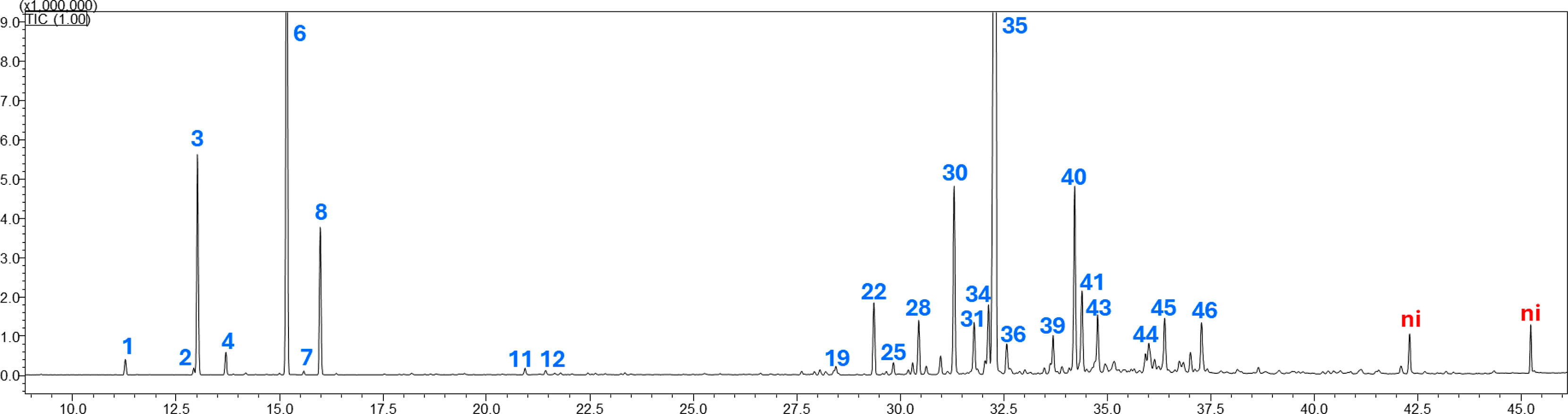
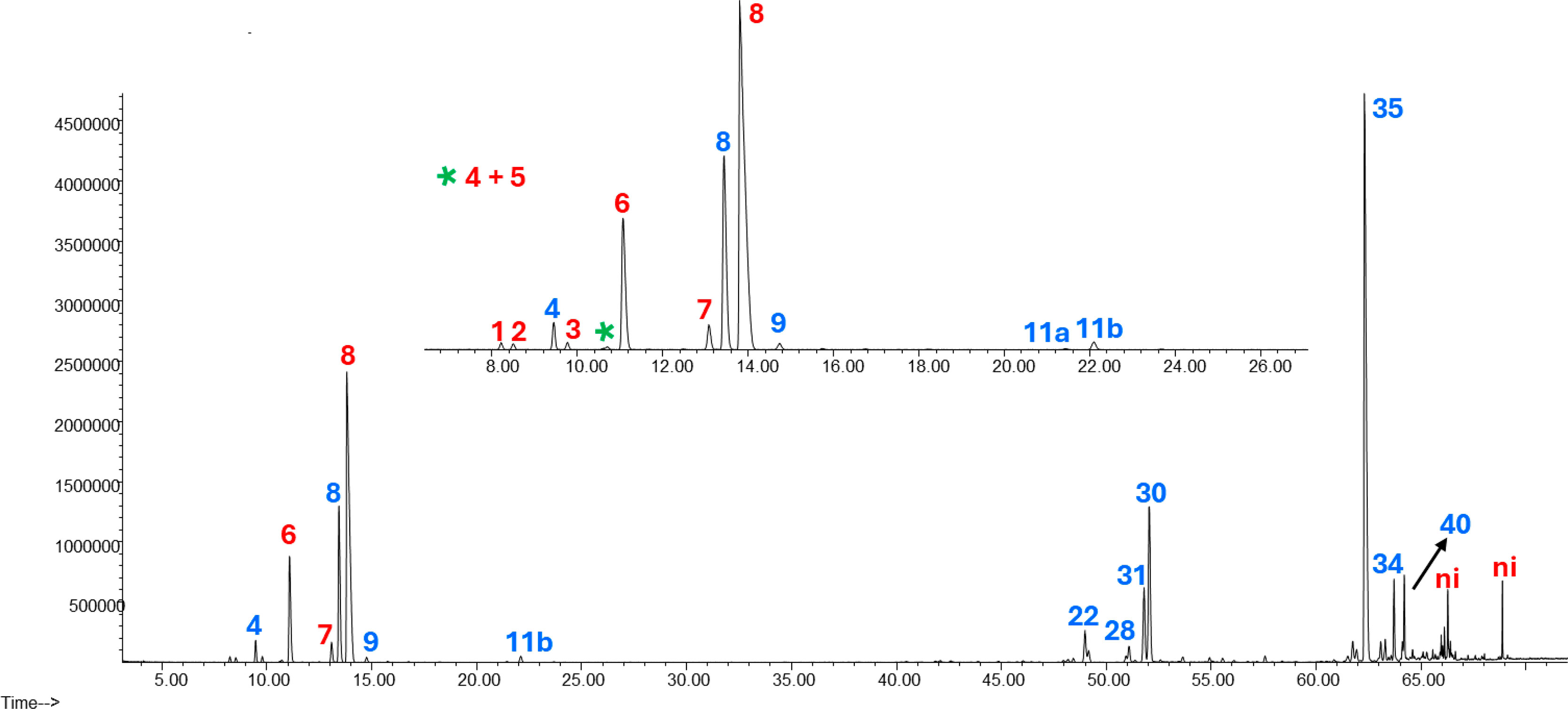 References: For the analytical conditions see Materials and Methods. The numbers of the peaks that are in blue are in accordance to the numbers provided in TABLE 1, while the numbers in red are in accordance with the numbers shown in TABLE 2; ni: not identified.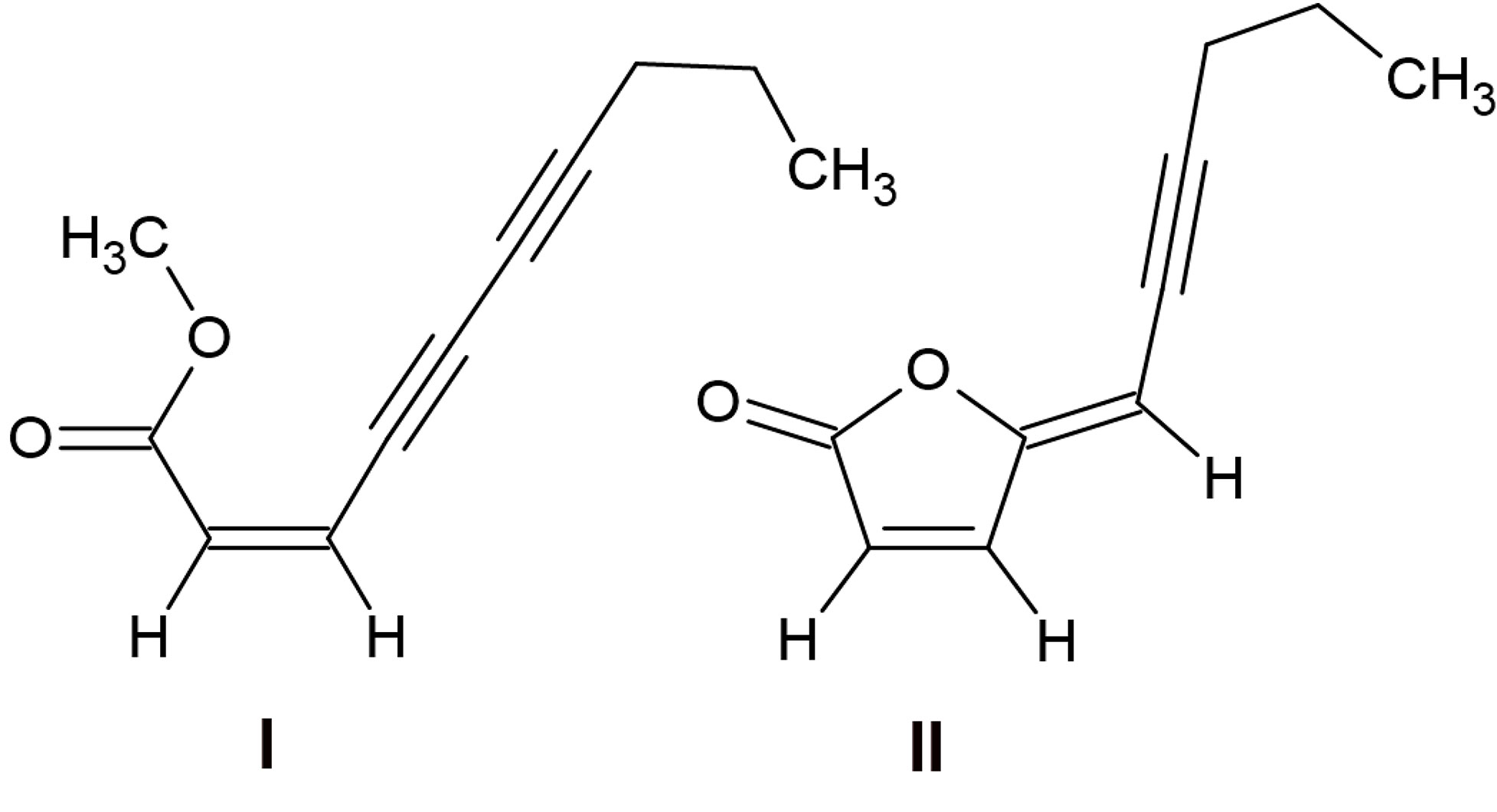
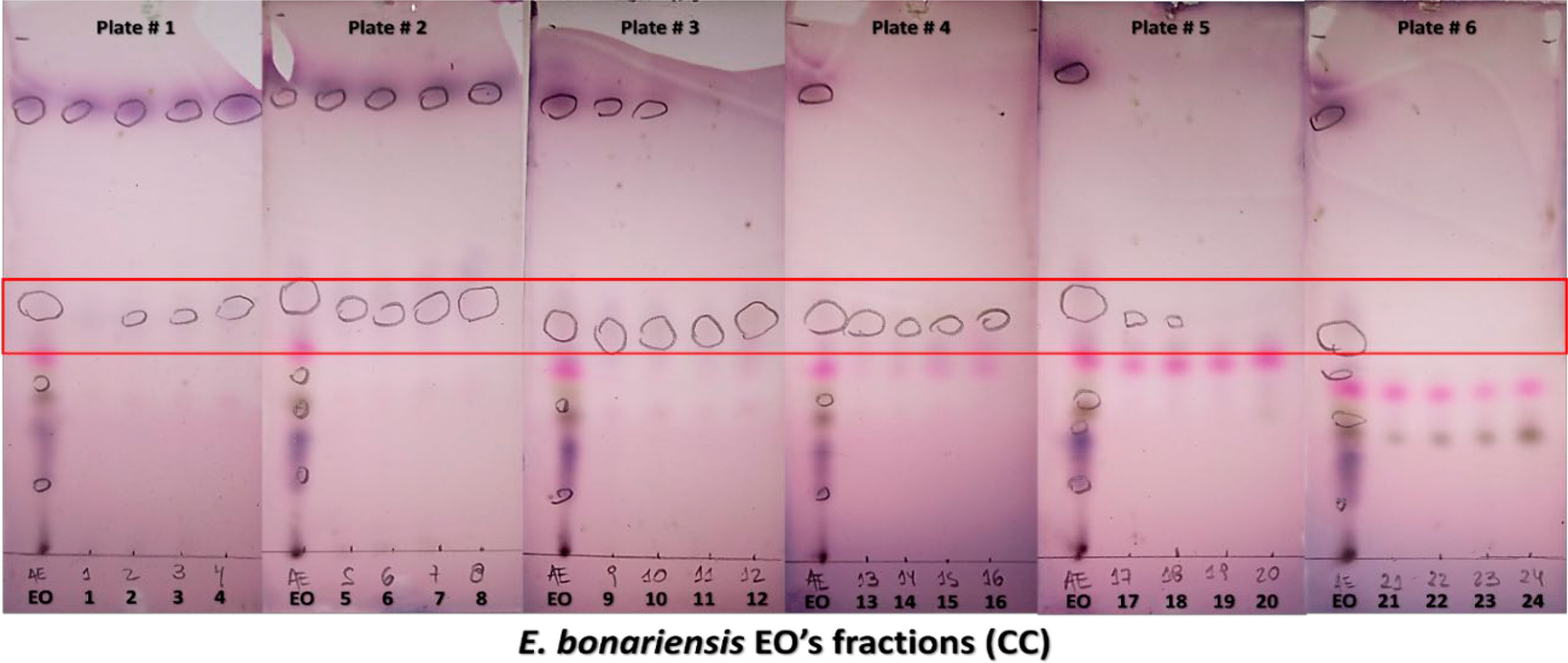 References: EO: E. bonariensis essential oil added for comparison purposes of the advancement of the separation. The red rectangle represents the cis-LAME band, barely visualized with p-anisaldehyde/sulphuric acid reagent, but visible by UVλ= 365nm and highlighted with black pen marks. Fractions 11 to 16 were mixed as containing almost pure cis-LAME. For experimental conditions see the Materials and Methods section.
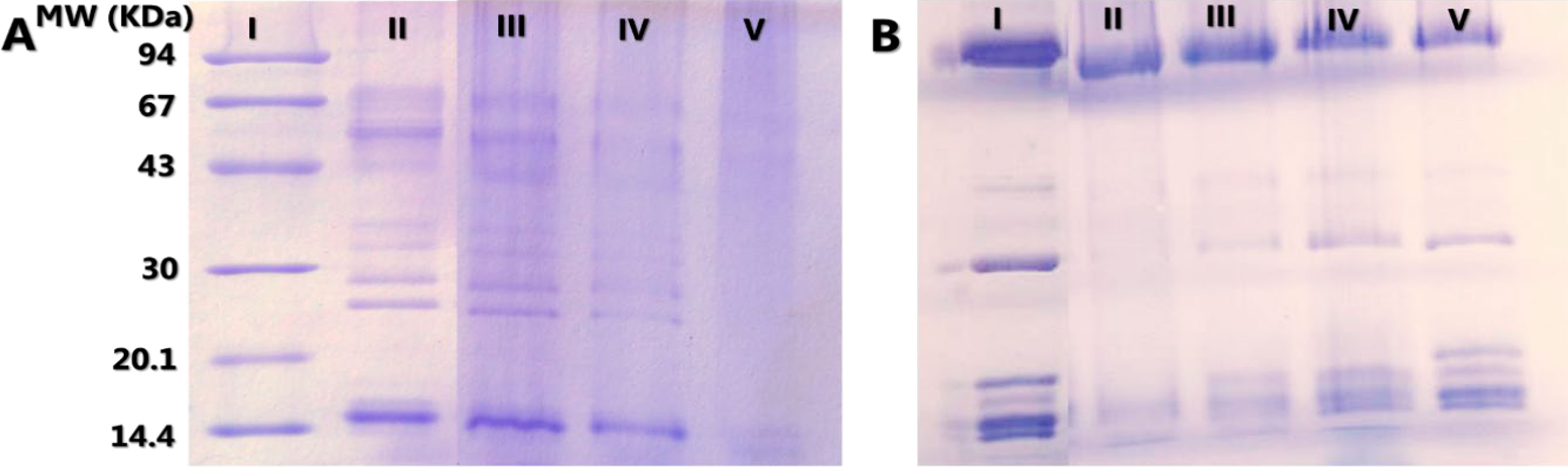 References: A: Test against B. diporus venom: I: molecular weight standard; II. pure venom (V); III. EtOH (negative control); IV. cis-LAME (active) + V; V. carquejone (positive control) + V. B: Test against B. alternatus venom: I. pure venom (V); II. carquejone (positive control) + V; III. cis-LAME + V (active); IV. and V. extracts in AcOEt of B. articulata and B. genistelloides var. crispa (respectively; positive controls) + V.